
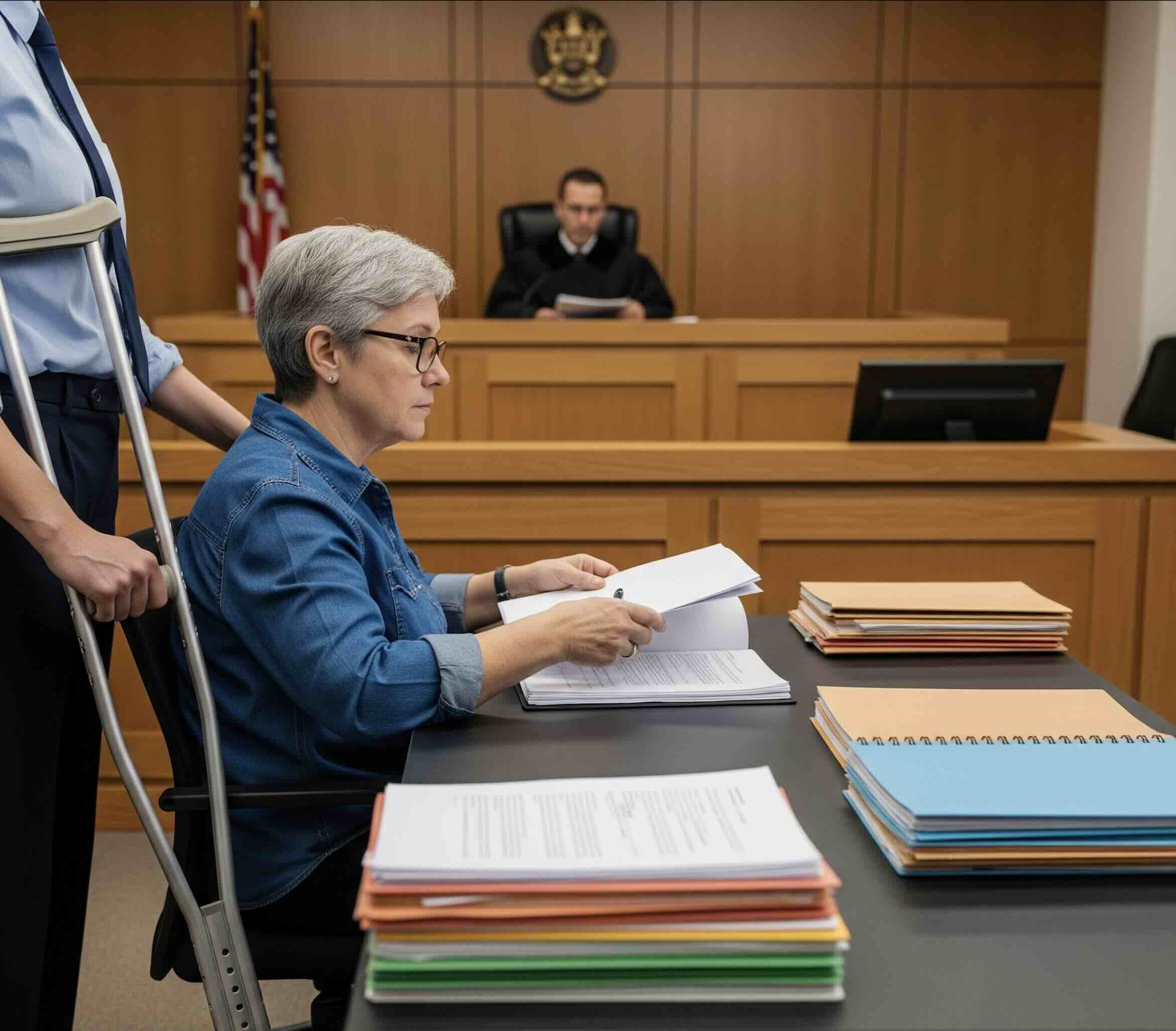
From the date you request an Administrative Law Judge (ALJ) hearing to the date you receive a written decision typically takes 12 to 18 months, though the timeline varies by hearing office backlog, case complexity, and whether the judge requests additional evidence. The hearing itself usually lasts 45 to 60 minutes, but the waiting period before the hearing is the longest part of the process.
The ALJ Hearing Timeline, Step by Step
1. Request the hearing (Day 1)
After your Request for Reconsideration is denied, you have 60 days to request an ALJ hearing. Once SSA processes your request, your case is transferred to the Office of Hearings Operations (OHO) assigned to your region.
2. Wait for a hearing to be scheduled (approximately 7–12 months)
This is the longest phase. The wait depends on the backlog at your assigned hearing office. SSA has historically aimed to schedule hearings within 270 days of the request, but actual wait times frequently exceed that target. During this period, you should continue treating with your doctors and keep records of all medical visits, because updated evidence strengthens your case.
3. Receive the hearing notice (approximately 75 days before the hearing)
SSA is required to send you a hearing notice at least 75 days before the scheduled hearing date. This notice includes the date, time, and location (or videoconference link), and lists any medical or vocational experts SSA may call to testify.
4. Attend the hearing (45–60 minutes)
Most ALJ hearings last under an hour. The judge will swear you in, ask you questions about your condition, daily activities, work history, and limitations, and may question medical or vocational experts about whether jobs exist that you can still perform. If you have an attorney or representative, they will question you and the experts and make legal arguments on your behalf.
5. Receive the decision (approximately 30–90 days after the hearing)
Most claimants receive the written decision within 30 to 90 days after the hearing, though some wait longer. The decision will be one of three types:
- Fully favorable — the judge agrees you are disabled as of the date you claimed.
- Partially favorable — the judge agrees you are disabled, but sets a later onset date than you claimed.
- Unfavorable — the judge finds you are not disabled.
What Affects the Timeline
Several factors can shorten or extend your wait:
- Hearing office backlog — Some offices have multi-year waits; others schedule within months. Your wait depends on your region.
- Whether you request a video hearing — Video hearings can sometimes be scheduled sooner than in-person hearings.
- Additional evidence requests — If the judge orders a consultative examination or additional medical records, the timeline extends.
- Postponements — If you or your representative requests a postponement, the hearing is rescheduled, adding months.
How to Avoid Delays
- Submit all evidence before the hearing. SSA's rules generally require you to submit evidence at least five business days before the hearing. Late-submitted evidence can result in a postponement or the judge giving it less weight.
- Keep treating with your doctors. Gaps in treatment are a common reason judges question the severity of a condition. Continuous treatment creates a contemporaneous medical record.
- Respond promptly to SSA correspondence. Missing deadlines for forms or evidence requests adds delay.
- Hire a representative early. An attorney can ensure your evidence is complete and submitted on time, reducing the chance of postponements.
What Happens After the Decision
If the decision is favorable, SSA will calculate your benefits and begin payments (including any past-due back pay). If the decision is unfavorable, you have 60 days to request Appeals Council review. If the Appeals Council denies review, you can file a federal court complaint.
Frequently Asked Questions
Can I speed up my hearing? SSA offers "critical case" prioritization for dire-need situations (homelessness, inability to afford medication, or terminal illness). Your representative can request expedited handling with supporting documentation.
What if I cannot attend on the scheduled date? You can request a postponement, but repeated or last-minute postponements are often denied and can delay your case by months. Request any change as early as possible.
Will I get back pay for the months I waited? Yes. If you are approved, SSDI back pay covers the months from your established onset date (after the five-month waiting period) through the date of the decision. The long wait is compensated retroactively, but it is not paid in advance.
Do I need a lawyer for the hearing? You are not required to have a lawyer, but claimants with representation are approved at higher rates at the ALJ level. A representative prepares your testimony, organizes your evidence, and cross-examines the vocational and medical experts — all of which can affect the outcome.
If you are waiting for an ALJ hearing or have just received a reconsideration denial, contact Lang Law, LLC for a free consultation. We represent claimants at every level of the SSD appeal process on a contingency basis.